

Key messages
- Programming entry points should be informed by political dynamics, institutional incentives and systemic opportunities for influence.
- Co-creation is built on shared priorities, inclusive participation and locally led design.
- Integrated and portfolio approaches embed justice and security across development sectors.
- MEL systems enable adaptation and track people-centred outcomes.
- People-centred programming prioritizes outcomes and engages diverse actors, making it feasible even in politically constrained settings.
5.1 Introduction
In Step 1, teams analyse justice and security systems by mapping stakeholder interests, understanding how power operates, and identifying the formal and informal institutions, actors, and relationships that shape outcomes. Tools such as PPEA, stakeholder mapping, and systems analysis help expose the structures, incentives, and dynamics that sustain injustice or drive insecurity.
Step 2 builds on this analysis. It moves teams from diagnosis to design by identifying entry points for engagement, co-creating solutions with communities and institutions, and testing and adapting interventions. Strategic design means using learning to decide where and how to begin, in ways that build trust, avoid harm, and create the potential for broader, long-term change. The Six Dimensions Tool, developed specifically for this Guide, supports this process by helping teams identify entry points that are timely, legitimate and feasible (see Section 5.3.2). These are not technical fixes, but opportunities to shift power, relationships and outcomes for people.
A core element of the approach is the need to strategically combine support at both the institutional and community levels to enable systems change. This holistic approach is essential to shifting outcomes at scale, as neither level can do so alone. In practice, teams may not always be able to engage both levels at once. Political constraints, limited access or risks will shape what is feasible. This does not mean the approach cannot be applied. What matters is understanding why the combination matters, acting where space exists now and remaining alert to opportunities to connect the two over time. This helps ensure that change within institutions translates into improved experiences for people, and that people’s rights, needs and perspectives shape how systems evolve.
Designing and testing people-centred solutions provides an overview of the key components of Step 2. It highlights the core dimensions of people-centred change across both communities and institutions. As shown in the diagram, much of this chapter is dedicated to Parts A and B, which explore in depth how to work with communities, non-State and hybrid actors (Part A) and State institutions (Part B) to design people-centred solutions. These sections are central to the Guide, reflecting the importance of combining action across both levels to enable meaningful systems change. They translate the core principles of the approach into actionable strategies that can be adapted across contexts.
Diagram 5: Step 2 at a glance—Designing and testing people-centred solutions
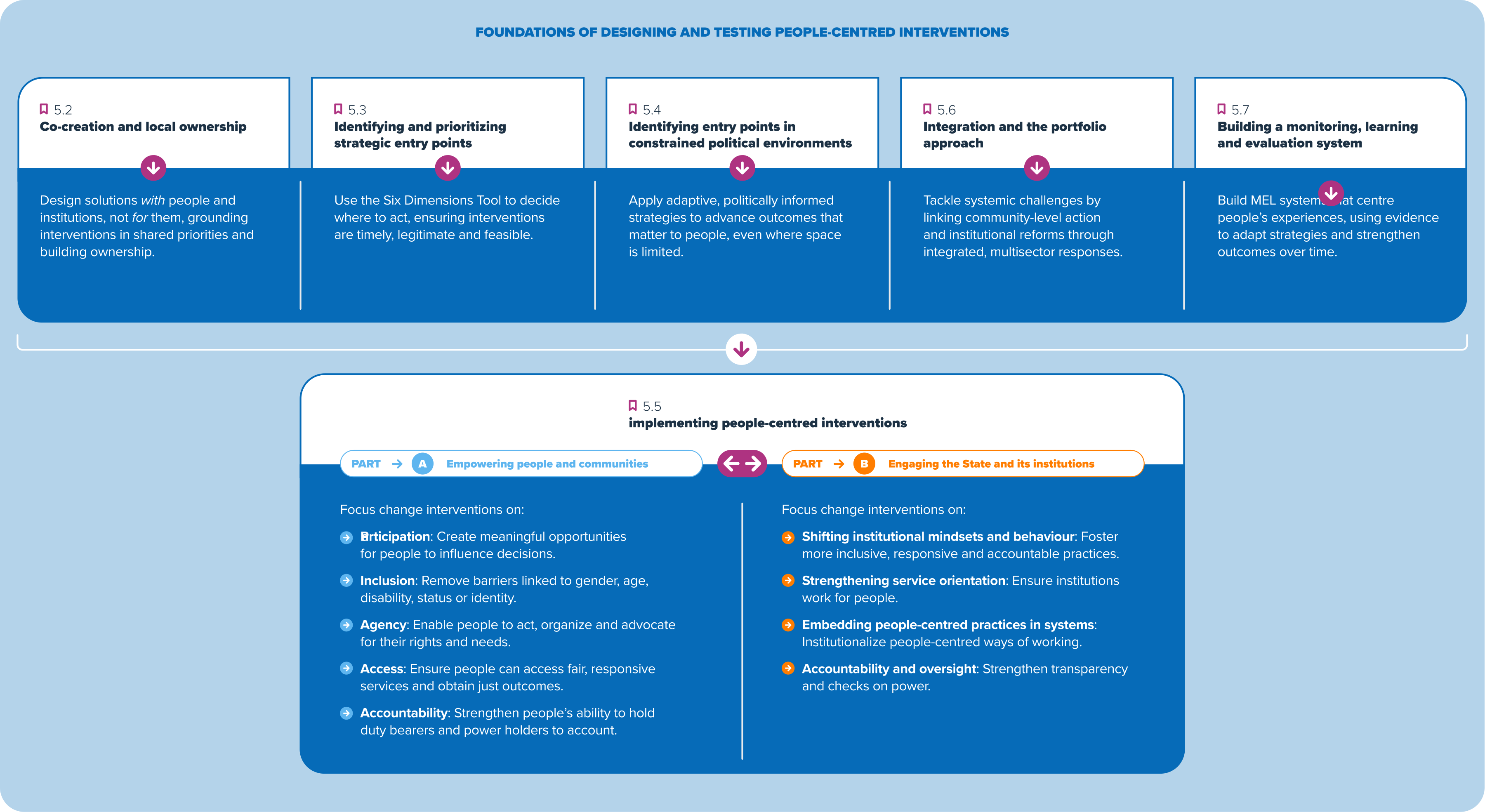
Foundations of Designing and Testing People-Centred Interventions
The people-centred approach helps teams think in the long term while acting strategically in the short term (see Box 18).


5.2 Co-creation and local ownership
Effective people-centred justice and security programming depends on sustained engagement with communities, institutions and other stakeholders. It requires their active involvement not only in shaping interventions but also throughout implementation, monitoring and adaptation.
Co-creation offers a structured way to achieve this. It is a collaborative process that brings stakeholders together across the programme cycle—from identifying problems and designing solutions to delivering, evaluating and adjusting interventions. Unlike one-off consultations, co-creation is ongoing and participatory. It is grounded in shared analysis, joint decision-making and collective responsibility for outcomes.
This section defines the core elements of co-creation and identifies common challenges and strategies to address them. It explores practical ways of applying co-creation in programme design and implementation and highlights its role in developing a robust theory of change and fostering local ownership.
Co-creation begins during design, with participatory processes to define problems, generate ideas and shape solutions. It continues through delivery and adaptation, involving stakeholders in setting priorities, testing interventions and sharing responsibility for results. Participatory data collection—such as legal needs surveys, user journey mapping and community scorecards—can support this process and strengthen shared learning and accountability.
Co-creation helps teams engage diverse perspectives, identify strategic entry points, promote inclusion, foster integration across sectors and build sustained local ownership of reforms. It also strengthens learning by enabling community-generated data to inform decisions, reveal programming blind spots and support adaptive programming.
Engaging communities in justice and security programming is critical. For community-level interventions, participation ensures they are locally led, reflect community priorities and respond to real needs. It recognizes that people affected by injustice or insecurity bring valuable insights and practical knowledge about what can improve their situation.
For institution-focused interventions, participation ensures that justice and security services respond to how people actually experience these systems, including their needs and expectations. This is particularly important for groups who face systemic exclusion, such as women, persons with disabilities, displaced populations and marginalized communities.
Co-creation does not require engaging all stakeholders at all times. It means strategically involving the right people, at the right time, in the right way, to shape decisions and outcomes.
Sustained co-creation supports local ownership. When institutions, civil society and communities lead and drive reforms, initiatives are more likely to reflect real needs, be seen as legitimate and remain relevant and accountable over time.
Co-creation is essential for systems change. Shifting systems requires changes in relationships, mindsets and power dynamics. Co-creation starts with people’s experiences and perspectives, fostering new ways for institutions and communities to work together. It can build trust, reshape accountability and transform how justice and security are delivered. For example, it might involve community members and police jointly identifying local safety concerns, or court staff and users jointly redesigning case management tools. These processes are not purely technical. They build trust, change relationships and support shared accountability.

Table 6 contrasts traditional State-centric approaches to justice and security programming with people-centred co-creation, using digitalization in court systems as an example.
Table 6: From State-centric to people-centred digitalization in the court system
| STATE-CENTRIC APPROACH | PEOPLE-CENTRED APPROACH |
|---|---|
| Considers how technology can make the existing court system more efficient | Considers how technology can improve people’s access to fair and inclusive justice systems. |
| Treats digitalization as a technical endeavour focused on training and equipment. | Treats digitalization as an opportunity to shift how justice is delivered, supporting participation, fairness and trust, not just efficiency. |
| Features top-down decision-making primarily by high-level government officials and/or technical experts. | Features holistic decision-making that engages diverse stakeholders across the system, including local authorities, courts, lawyers and the communities the courts are meant to serve. |
| The digital tool is designed according to what the law says, how the court should manage cases and what the staff need to do their job more efficiently. | The digital tool is based on an understanding of how the system works in reality—how people actually navigate the court system, whether the law is working, who has access and what barriers exist for different groups. |
| Involves limited or one-off consultation with communities. | Collaborates with communities, considers their perspectives and priorities and ensures the digital solution aligns with their diverse needs. |
Co-creation is not a stand-alone activity. It is part of the process of moving from understanding how the system functions to designing an effective response. Step 1 focused on understanding problems through people’s perspectives and experiences and analysing the actors, incentives and structures that sustain unjust outcomes. It identified potential partners, sources of resistance and entry points for change, as well as who needs to be engaged for solutions to be legitimate and sustainable.
Step 2 builds on this foundation. It focuses on how to bring different stakeholders together around a shared understanding of the problem and a common direction for change. Co-creation is the bridge that connects analysis to action supporting teams to test solutions, shift relationships and build shared ownership of justice and security reforms.
5.2.1 Challenges for co-creation
- Teams may face legitimate challenges that constrain co-creation:
- Projects are focused on institutions with limited community interface
- Resistance from institutions or communities to engage with each other
- Limited access to stakeholders, especially in remote, insecure or politicized contexts
- Stakeholder reluctance due to fear of losing control or scepticism about participation
- Legal or regulatory barriers limiting who can participate or how decisions are made
- Personnel unfamiliar with people-centred approaches or unsure of their value
Co-creation remains possible even in constrained environments. The strategies identified in Box 19 may help.
Co-creation ensures that those most affected by injustice, including women, people with disabilities and marginalized groups, can shape interventions. It also enables real-time learning by embedding community feedback and participatory monitoring into how programmes adapt.
Co-creation is the foundation of a people-centred approach, enabling shared ownership, responsiveness and transformation of justice and security systems.
5.2.2 Co-creation in the project design
Co-creating during the design phase ensures that justice and security interventions are based on the right problem, reflect people’s everyday experiences, promote shared ownership and support sustainable outcomes.
Step 1 analysis informs participation. Stakeholder mapping, conflict and power analysis, and political economy insights help identify who to engage, when and how. This makes participation both inclusive and strategic. It reflects power dynamics, highlights likely resisters and allies, and clarifies whose involvement is essential to unlock change. For example, in conflict-affected settings, developing action plans in collaboration with local authorities to address specific challenges in their communities has strengthened joint ownership, improved responsiveness to locally defined priorities, and helped build institutional capacity for participatory planning and service delivery. This approach increases the likelihood that improvements will be maintained and scaled over time.
In some contexts, government or institutional partners may actively resist aspects of the people-centred approach. Where direct co-creation is not possible, teams can explore other entry points such as supporting community-led initiatives or working through trusted intermediaries. A people-centred approach can still be applied by adjusting how, where and with whom engagement happens.

Many activities in Step 1, such as systems mapping, user journey analysis, and community consultations, can serve as entry points for co-creation. These should be built upon, not repeated.
The UNDP Human Rights-Based Approach (HRBA) Toolkit offers additional guidance on participatory design. It promotes structured engagement between rights holders (e.g., women, youth, displaced people) and duty bearers (e.g., justice, security and governance institutions) to define priorities, shape objectives and influence the design of initiatives from the start (p46).
Examples of participatory design approaches include:
- Building on existing consultations, dialogue platforms or community-level mechanisms where communities have identified justice and security needs.
- Facilitating joint sensemaking workshops with State and non-State actors.
- Organizing validation sessions to review draft outcomes or theories of change.
- Creating multidisciplinary design teams that reflect how justice and security are delivered.
For example, in Kenya, the Chief Justice assembled a diverse team with expertise in law, human rights, information technology and communications to co-design a people-centred transformation framework for the judiciary.
What matters most is not the tool or workshop format, but the process. Effective co-creation creates space for diverse actors to shape key decisions and the direction of change.
As part of co-creation, teams should develop a theory of change (ToC) that links interventions to meaningful outcomes for people. This should be grounded in Step 1 analysis, including who holds power, who may resist or support change, and why justice and security needs remain unmet. A strong ToC clarifies how interventions improve people’s experiences, not just institutional outputs. For example, instead of stopping at “train community police”, the ToC should explain how that training will build trust or improve perceptions and experiences of safety. Making these assumptions explicit keeps programming focused on outcomes that matter and supports adaptive management
5.2.3 Co-creation in implementation
Co-creation during implementation focuses on how justice and security services, and the reforms that support them, are actually delivered, tested, adapted and scaled. This phase is critical for embedding participation, sustaining collaboration, and ensuring interventions remain relevant, accountable and grounded in people’s rights and needs, especially those of the most vulnerable and marginalized.
The goals of co-creation in implementation are to:
- Strengthen community agency and accountability mechanisms
- Generate continuous feedback for learning and adaptation
- Institutionalize participatory structures for sustainability
Co-creation includes ongoing collaboration between communities, institutions and civil society actors to shape how services are delivered, how challenges are addressed and how progress is monitored. This includes feedback mechanisms, joint decision-making and adaptive responses that ensure justice and security services reflect people’s needs and respond to systemic barriers. Participatory monitoring tools, such as community scorecards, client satisfaction surveys or citizen oversight platforms, can support this process.
Co-creation in implementation builds relationships, clarifies roles and enables joint problem-solving. It creates mechanisms, such as dialogue forums or community committees, that can outlast individual projects and support sustained reform. Tools such as process mapping (see Box 20) can support multistakeholder processes of co-creation.

Co-creation embeds accountability and supports adaptive learning. Communities and civil society participate not only in service delivery but also in monitoring and oversight. Mechanisms such as joint monitoring, independent oversight and civic feedback ensure services remain responsive to community priorities and institutions are accountable.
Co-creation enables local ownership. When institutions, civil society and communities co-lead implementation, they are more likely to invest in and sustain reforms. Local ownership means that those affected by injustice or insecurity have influence over decisions and a stake in shaping outcomes.
People-centred systems thrive when communities are not just beneficiaries, but active partners in delivering justice and security. Co-creation is the foundation of a people-centred approach supporting shared ownership, responsiveness and transformation of systems.


5.3 Identifying and prioritizing strategic entry points
Participatory co-creation processes help generate ideas and potential entry points for programming. But how do teams prioritize where to start?
Selecting entry points requires attention to what is realistically possible now, not just what is theoretically ideal. There is no fixed list of best options. Entry points must be identified through a context-specific process.
Identifying entry points is necessary not only at the start of a new programme. It is equally important when refining existing work, responding to shifts in context, or aligning with government, donor, or organizational priorities. Entry points help focus efforts where change is possible and meaningful, whether that means adapting a current intervention, finding opportunities within a mandated area of work or layering in more inclusive and locally relevant approaches. This section introduces a structured tool to support that process in a wide range of scenarios.
5.3.1 The Six Dimensions Tool
The Six Dimensions Tool, developed by Leanne McKay, helps teams evaluate and choose among possible entry points using a structured, systems-aware lens. It balances what is desirable, possible and feasible, and translates Step 1 analysis into a people-centred strategy.
It supports identification of entry points that are context-relevant, politically smart, rights-informed, operationally feasible and catalytic.
The most strategic entry points are those where:
- People’s needs and system opportunities intersect, and
- UNDP is well-positioned to act safely, credibly and effectively.
The tool consists of six dimensions:
- Readiness and ripeness of the system
- Receptiveness of actors
- Resistance to change
- Risks of engagement
- People’s priority needs
- Organizational feasibility
Each dimension is explored below to guide teams through a structured process for prioritizing where and how to act.
- Readiness and ripeness of the system Assess whether there are signals that the system is ready for change. Are there existing reform efforts, policy shifts or social dynamics that create momentum? Look for windows of opportunity such as post-conflict transitions, leadership changes or institutional reforms. Entry points are more strategic when they align with broader shifts already underway, making change more viable and sustainable.
- Receptiveness of actors Identify individuals or groups who are open to rights-based engagement and change. These may include reform-minded officials, civil society leaders, or community networks. Step 1 stakeholder analysis helps locate such actors. Change agents are more effective when connected into supportive networks that can drive and sustain change from within the system. Nurturing and empowering these networks builds their resilience and supports transformational change.
- Resistance to change Examine where resistance may arise and why. Resistance may come from actors who fear losing power or status, control, or resources. It can stem from capacity gaps or uncertainty about the goals of the change intervention. Resistance is a natural response to change. Understanding sources of resistance enables adaptive strategies, such as reframing reform benefits (e.g., describing the benefits as yielding greater efficiency or reducing burdens on institutions) and starting with incremental change that does not directly threaten entrenched interests or engaging trusted intermediaries.
- Risks of engagement Evaluate potential risks, including harm to communities, reputational risks for UNDP or legitimization of harmful practices. Ensure interventions abide by the Do No Harm principle by assessing social and environmental risks, political and operational risks, and human rights risks. Ensure that adequate safeguards, monitoring and accountability measures are in place. Prioritize the safety and rights of communities, especially vulnerable groups, in all engagements.
- People’s priority needs Ensure entry points reflect the real needs and expectations of affected populations, particularly women, youth and other marginalized groups. What do people want from justice and security systems? What barriers do they face in accessing justice and security? Ground analysis in a rights-based approach and focus on interventions that can progressively advance people’s rights. Prioritizing people’s rights, needs and expectations helps ensure interventions focus not only on where the system is ready but also where change is urgently needed and most likely to be felt by people, especially the most vulnerable and marginalized.
- Organizational feasibility Even when an entry point aligns with people’s justice needs and system dynamics, teams must assess what is institutionally feasible and strategically appropriate. Determine whether the intervention aligns within UNDP’s mandate, partnerships, capacities and comparative advantage, while also considering how it complements
- Mandate and positioning: Does the engagement align with UNDP’s development role and position within the UN system? Are there political or operational sensitivities that limit direct engagement with certain actors?
- Delivery modalities: Where engagement with government is constrained, can UNDP support intermediary actors such as university legal clinics, national human rights institutions or bar associations? Whether using DIM (Direct Implementation Modality) or NIM (National Implementation Modality), the key is shaping the modality to promote inclusion, responsiveness, legitimacy and accountability to the people justice and security systems serve.
- Partnership ecosystem: What existing partnerships can be leveraged or strengthened? How can UNDP complement rather than duplicate efforts by other UN agencies, donors or national institutions?
- Added value: What unique capabilities, convening power or technical expertise does UNDP bring? Where can it enable reform, broker dialogue or foster inclusion in ways others cannot?
- Internal coherence and integration: Can existing work be adjusted to better reflect a people-centred approach? Can support to national-level reforms (e.g., policy or legal frameworks) be more intentionally connected to local-level interventions (e.g., legal aid, police-community engagement) for greater responsiveness? Are there opportunities for integration across UNDP teams and projects?
These dimensions are interconnected and should be considered together when identifying and prioritizing entry points. The Six Dimensions Tool supports strategic planning, guides adaptation of ongoing work, and helps navigate complex or constrained contexts.
5.3.2 How to Use the Six Dimensions Tool
The Six Dimensions Tool is designed to help teams translate analysis into strategy. It supports prioritization of entry points for justice and security programming that are not only desirable but also strategic, feasible and people-centred.
This tool works best when used collaboratively with UNDP teams, partners and stakeholders as a structured conversation rather than a checklist.
When to use the tool
The tool can be used for:
- Designing a new project or intervention
- Reviewing or adapting existing work
- Exploring options in constrained or shifting contexts
- Prioritizing among multiple possible interventions
Step-by-step guidance
1. Start with your analysis. Use findings from Step 1 (e.g., stakeholder mapping, PPEA, conflict analysis, and people’s justice and security needs) as the evidence base. The tool helps move from understanding how the system functions to deciding where and how to act.
2. Identify a potential entry point. This could be a specific issue (e.g., legal aid, community safety, informal justice), a space for engagement (e.g., a new policy, a local initiative) or an idea already under consideration
3. Assess the entry point using all six dimensions. Ask guiding questions such as:
- Is this timely—are there shifts in the system that make change possible?
- Who is open to collaboration?
- Who might resist people-centred change interventions?
- What are the potential risks of engagement or non-engagement to people, institutions or UNDP?
- Does the intervention respond to people’s priority needs, especially those of the most marginalized groups?
- Can UNDP act safely, credibly and effectively?
Use a table or visual matrix to structure the conversation.
4. Compare and prioritize options. If you are considering multiple entry points, use the tool to compare them. Some may be high-impact but high-risk; others may be feasible but limited in scope. The aim is to select entry points that are strategic, rights-based and capable of catalysing broader change.
5. Document decision-making. Capture key insights and decisions in a short note. This can inform concept notes, discussions with partners or donors, and future learning. Revisit the analysis regularly to adapt as context shifts.
5.4 Identifying entry points in constrained political environments
In some contexts, space for justice and security programming is limited. Political will may be weak, engagement with government restricted, and working with civil society may be politically sensitive or operationally difficult. In such settings, some may assume that little can be done until conditions improve.
These assumptions often stem from narrow understandings of justice and security— for example, equating justice with access to courts and formal laws, or viewing State security institutions as the primary providers of security. They may also reflect a limited definition of success, focused on institutional outputs such as passing laws or reforming State entities, rather than people-centred outcomes such as empowerment or improvements in people’s experience of rights, safety and justice.
The people-centred approach challenges these assumptions. It recognizes that even in constrained environments, there are practical ways to reduce harm, strengthen protection, and improve people’s ability to access justice and feel safe. This requires working politically and adaptively to advance meaningful outcomes, even where space is limited. In some cases, this may involve pivoting from support to institutions to working with community-based or civil society actors, particularly where institutional legitimacy has collapsed, or political repression constrains other options. Such pivots can open space for people-centred interventions if they are intentionally grounded in local priorities and developed in partnership with communities and civil society. The approach also encourages teams to look ahead—identifying early signals of change, preparing for shifting conditions and positioning local actors to seize emerging opportunities when space opens.
Understanding the political landscape and identifying risks, opportunities and feasible entry points requires robust political economy analysis. This helps ensure that programming is grounded in context, informed by power dynamics and responsive to evolving conditions.
The people-centred approach is a method, and a mindset: even in constrained contexts, UNDP can still act as a broker of trust, legitimacy, and accountability. The following strategies can help teams identify feasible entry points, navigate political constraints, and stay focused on outcomes that matter to people.
5.4.1 Reframe justice and security to unlock space for action
Reframing is part of an adaptive approach that allow programmes to remain relevant and responsive, while sustaining a focus on empowering people, improving fairness and strengthening public trust.
Use locally resonant terms Terms such as “dignity”, “fairness” and “safety” may align more closely with cultural and local norms than formal rights-based or accountability language, which can be politically sensitive. Framing justice and security in terms of social stability, public trust (especially after elections or crisis) or economic stability can open space for meaningful engagement. For example, police-community dialogues can be framed around improving local safety and reducing tensions, rather than as formal police reform. Reframing is not a retreat from people-centred goals but an adaptive strategy to maintain space for engagement and action.
Emphasize practical service improvements Frame interventions around procedural improvements, such as making services more efficient or reducing pressure on public services. These changes may be more acceptable to authorities while still supporting positive outcomes. However, the focus must remain on whether interventions are improving outcomes for people. Tactical entry points must align with people-centred principles. How fairly and respectfully a person is treated in their day-to-day interactions with justice and security providers often matter more to the person than formal accountability mechanisms. Strengthening procedural fairness can help build trust, even when political conditions constrain deeper reforms. In some contexts, this may also include supporting informal actors and networks that help deliver accessible and trusted services.
5.4.2 Strengthen community-level justice and security solutions
In constrained contexts, local-level action often provides the most practical and trusted entry points for people-centred justice and security. Strengthening justice and security solutions at the community level, including their capacity, sustainability and reach, can support people to peacefully resolve disputes, reduce harm and promote social cohesion, even where national institutions are inaccessible or contested. This also responds to the reality that, across contexts, most people do not rely on State institutions to resolve their justice and security issues, turning instead to a diverse range of local providers. Where appropriate, strengthening linkages between local providers and formal (State) systems can support longer-term impact and coherence.
Work with subnational authorities to improve services Where central engagement is restricted, subnational actors such as local councils, municipal administrations and local police may remain operational and trusted. Procedural improvements, such as complaint mechanisms, court user helpdesks or community safety audits, can build momentum for broader change. For example, participatory audits to identify local safety concerns can lead to safety plans and practical measures such as improved street lighting or changes to patrol patterns, creating space for ongoing police-community engagement. These approaches can be especially effective when integrated into broader area-based programming that coordinates justice, security and service delivery efforts within a defined locality.
Support trusted intermediaries and non-governmental providers Actors such as universities, NHRIs, and bar associations or other professional associations (e.g., associations of social workers or mediators) can serve as trusted intermediaries where direct engagement with State institutions is constrained. They help extend access to justice, deliver services that are locally relevant and accessible, and can act as a bridge between communities and formal systems where appropriate.
Support civil society and community-led mechanisms When institutions are repressive or lack legitimacy, CSOs, community-based groups, and community leaders often provide essential access to justice and protection. Legal empowerment efforts, such as paralegals, mediation and collaborative dispute resolution, can offer trusted, safer alternatives to formal institutions. However, support must be based on genuine participatory design to ensure interventions reflect local priorities, enable ownership, and avoid reinforcing existing tensions or power imbalances. Conflict analysis and a Do No Harm approach is critical, especially where civic space is closing or communities face surveillance or retaliation.
See Section 5.5, Part A for examples of access-focused interventions.
5.4.3 Integrate justice and security into other development work
People’s priority justice and security needs often relate to issues such as access to basic services, legal identity, family matters or land disputes. In constrained environments, these needs can often be identified and addressed through programming in other sectors, such as livelihoods, health or social protection. Integrating justice and security elements into broader development work can open space for meaningful engagement, even where direct justice or security programming is restricted.
Link justice to access to services or economic opportunities Support to civil documentation can enable access to education, healthcare and social protection, while reducing exclusion and vulnerability. Linking land tenure to livelihoods programming can support more sustainable economic recovery and women’s economic empowerment.
Embed dispute resolution mechanisms In return and reintegration programmes, land disputes or family tensions may pose risks to community stability. Supporting community leaders or local peace and security committees to address these issues through legal awareness, mediation training or access to legal aid can help prevent local grievances from escalating.
Leverage existing community structures Link with UNDP-supported mechanisms such as community stabilization committees— for example, by training members as paralegals or connecting them with bar associations to ensure serious cases are referred to formal justice systems.
5.4.4 Use data and dialogue to influence change
Data and dialogue can be instruments for maintaining engagement, negotiating entry points and shifting institutional behaviour. In constrained contexts, this requires careful attention to how data is collected, framed and shared. Data must be gathered ethically and safely, with informed consent and appropriate anonymization. It should be grounded in political economy analysis, therebv ensuring that recommendations reflect the realities of power and incentives and are shared strategically with the right actors at the right time.
Strategically open space for dialogue Use evidence to shift narratives towards service improvements rather than system critique. For example, legal needs surveys, user journey mapping and service audits can highlight practical service gaps. This data can open space for dialogue with key stakeholders (either directly or through allies and third parties), focused on incremental improvements.
Enable engagement through regular briefings Presenting findings in informal, private briefings with key government stakeholders (rather than through public dissemination) helps maintain relationships, reduce defensiveness and build momentum for practical change.
5.4.5 Work politically
Working politically means recognizing that justice and security programming is not only technical; it is inherently political. In constrained environments, progress depends on navigating power dynamics, building coalitions and adapting strategies as space for action shifts. This requires working politically both externally, in relation to governments, donors and partners, and internally, within UNDP itself. Constraints on institutional engagement, donor pressures or restricted civic space are not unique, and strategies that worked in other contexts can inform decision-making and action.
Engage strategically with political and donor dynamics Programme pivots, access restrictions and decisions to end a project or withdraw from a location are often shaped by political and donor priorities, not just technical analysis. Building space for people-centred justice and security requires evidence of outcomes that matter to donors and decision-makers, such as contributions to stability, resilience or economic inclusion. Advocacy should link justice and security outcomes with these broader priorities to secure support and legitimacy for continued engagement.
Coordinate and align through informal alliances UN and donor coordination platforms, such as joint working groups, can serve as entry points for shaping shared narratives and identifying programming space for justice and security interventions. Community-generated data can help align local actors such as civil society, academics and subnational officials and foster collaboration around shared problems and solutions.
Navigate internal constraints Internal constraints, including risk aversion, rigid funding models and pressures to deliver quickly, can hamper people-centred interventions that rely on localization (i.e., shifting power and resources to local actors). Working politically includes advocating internally for the people-centred approach and for the enabling conditions it requires, such as flexible funding, local decision-making and space for adaptation.
5.4.6 Support State and non-State change champions
Successful change initiatives depend on champions who can drive and sustain progress. Even where space for change is constrained, identifying and nurturing champions is essential. Political space can shift quickly due to leadership changes, crises or new opportunities. Champions who are informed, motivated and trusted are well positioned to act when conditions allow. They may include reform-minded officials, respected community leaders or civil society coalitions. Each can play a role in sustaining local initiatives, influencing mindsets, or advancing broader policy or behavioural shifts at the institutional level.
Internal change champions can be identified by using Step 1 analysis to identify individuals within government or allied institutions, such as mid-level officials or local leaders, who are supportive or could benefit from being associated with a successful initiative. Support for them can include technical assistance, peer support, providing data and evidence for internal use, or learning opportunities, such as local exchanges, to demonstrate people-centred practices.
5.5 Implementing people-centred interventions
5.5.1 Adopting a holistic and integrated approach
Effective justice and security programming requires an integrated approach that strategically combines institution-focused (“top-down”) and community-focused (“bottom-up”) interventions. These are not separate tracks but interdependent and mutually reinforcing dimensions of a holistic, people-centred strategy.
Without this integration, top-down reforms risk becoming technocratic and disconnected from people’s needs, while bottom-up efforts risk creating parallel systems that lack sustainability or legitimacy. For example, improving access to justice for women may require both stronger institutional responsiveness and greater community-level agency. Progress in one area can reinforce gains in another, generating more sustainable, legitimate and responsive outcomes (see Box 21).
Successful change comes from a process that involves both sustained community demand and a willingness by the State to support and enable reform.
The approach recognizes that while justice and security are conceptually distinct, they are deeply interconnected in practice. People’s experiences of justice and security depend not on isolated institutions or sectors, but on a system of State, hybrid and community-based actors, institutions and mechanisms.
What matters is whether these actors contribute to outcomes that matter for people, such as safety, access to justice, fairness and accountability. Achieving these outcomes often requires coordinated action across diverse actors. For example, resolving community disputes, preventing and responding to GBV, or ensuring accountability in places of detention may require collaboration between police, courts, local authorities, civil society, and community groups and leaders.
Improving people’s experiences of justice and security means looking beyond conventional sectors to include all actors whose efforts help deliver services that are fair, accountable, and responsive to people’s rights and needs (see Box 22).
5.5.2 Applying the approach across development contexts
While the specific focus, sequencing, and delivery mechanisms may vary, justice and security interventions are relevant across all contexts, from conflict and crisis to long-term development. The people-centred approach provides continuity across this spectrum by grounding interventions in local needs, realities and outcomes, and adapting over time in response to changing governance conditions, capacities and risks.
In conflict-affected and crisis response settings, a people-centred and integrated approach is particularly important. State institutions are often weak or absent, and people rely on non-State and emerging mechanisms (such as non-state armed groups) for justice and safety. Programming typically focuses on re-establishing core functions, such as access to justice, dispute resolution and a trusted police or court presence, in ways that rebuild trust and enable responsive, inclusive governance. These efforts are often reinforced by stabilization and early recovery programmes that help create the conditions for the people-centred approach to take root.
In more stable contexts, programming may shift more towards institutional reform, civilian oversight, and ensuring that justice and security systems are not only functional but also deliver quality services that are inclusive, rights-based and accessible.
5.5.3 Core elements of the approach: People and institutions
People-centred justice and security programming focuses on two elements of the UNDP people-centred policy framework: Element 4: Empowering people and communities, and Element 5: Engaging the State and its institutions. These are explored in depth in Part A and Part B of this chapter.
Each element is defined by a set of core dimensions, or “domains of change”, that highlight where transformation is needed for justice and security systems to become more people-centred. These dimensions are interdependent and mutually reinforcing. They guide programme design and monitoring by helping teams to define the types of change they aim to achieve and how to observe or assess that change in practice.
Empowering people and communities means expanding people’s ability to shape and access justice and security, and to hold State, hybrid and non-State service providers to account. It focuses on five dimensions that reflect changes in knowledge, attitudes, behaviours, access to services and power:
- Participation: Creating meaningful opportunities for people to influence decision-making
- Inclusion: Addressing barriers linked to gender, age, disability, status or identity
- Agency: Enabling people to act, organize and advocate for their rights and needs
- Access: Ensuring people can use services and mechanisms that deliver fair justice and security outcomes
- Accountability: Ensuring power holders and duty bearers are held to account for their actions
Engaging the State and its institutions means supporting formal institutions to better serve people. This typically requires shifts in structures, incentives, norms and behaviours. It focuses on four dimensions:
- Shifting mindsets and behaviour: Promoting more responsive and inclusive practices
- Service orientation: Ensuring institutions work for people
- Embedding practice in systems: Institutionalizing people-centred ways of working
- Accountability and oversight: Strengthening transparency and checks on power
Table 1 (in Section 1.2) presents an illustrative list of areas where justice and security are relevant in UNDP programming. These interventions are not people-centred by default. Their design must be based on an understanding of the context; people’s needs, rights and expectations; institutional capacities; and the risk environment.
Programming should focus on outcomes that matter to people and achieve them in ways that both empower people and communities and strengthen justice and security systems (see Box 24).
5.5.4 Enablers of people-centred change efforts
Combining institution-focused and community-level support is essential because systems change requires shifts on both the demand and supply sides. Communities shape demand and hold institutions accountable, while institutions enable consistent, rights-based service delivery.
For example, supporting communities and local authorities to jointly identify safety concerns and co-develop responses, such as community safety plans, can ensure that people’s priorities are addressed in ways that are both responsive and institutionalized. Efforts to empower communities must be coupled with investment in the capacity of local authorities to understand and respond to justice and security needs, and to deliver sustainable services.
Sustained political and institutional support at the highest levels is also critical. When ministers, attorneys general, or heads of police and judiciary champion reforms, they can unblock bottlenecks, align incentives and ensure that commitments are acted on. Their backing strengthens implementation and increases the likelihood that reforms will be sustained. This support is also essential for embedding and institutionalizing change over time (see Step 3).
In some contexts, it may not be immediately feasible to engage at both community and institutional levels. What is essential is that the longer-term objective of integration remains part of the programming strategy and that teams stay alert to emerging opportunities—for example, a new reform-minded police chief or village administrator, or a change in government policy towards decentralization.
Teams should also seek synergies with other UNDP or partner projects or programmes; for example, a team might link a community dispute resolution intervention with a local governance project supporting administrative capacity. This integration mindset is a core part of the people-centred approach.
Introducing Parts A and B
Parts A and B form the heart of this Guide representing the two core elements of the people-centred framework:
They translate the people-centred approach into practice by focusing on how to work with both communities, non-State and hybrid actors (Part A) and institutions (Part B). Each part provides practical entry points, programming strategies and lessons drawn from UNDP’s justice and security work across a wide range of contexts. They are designed to inspire and support teams in adapting the approach to their own settings.
5.6 Integration and the portfolio approach
The people-centred approach calls not only for thinking in systems but also for acting systemically to address the interconnected causes and consequences of injustice and insecurity. These challenges such as poverty, displacement, gender inequality and climate vulnerability are deeply entwined and require coherent, multisectoral responses that reflect how people experience them in real life.
Integration is not an end in itself, but a means to enable systemic change. UNDP pursues integrated approaches to respond more effectively and sustainably to complex, interconnected development challenges.
The people-centred approach reinforces and operationalizes UNDP’s corporate commitment to systems thinking, integration and portfolio-based programming as essential enablers of the systemic transformations needed to achieve “shared prosperity, strengthened social cohesion, and more resilient, equitable futures” (UNDP Strategic Plan, 2026–2029).
5.6.1 Integration in practice
Integrated programming refers to the deliberate connection of multiple sectors, disciplines and actors to respond to complex development challenges in a coherent and collaborative way. It goes beyond parallel or coordinated efforts by convening actors across mandates and areas of expertise to co-design, co-implement and co-monitor multifaceted solutions.
Integration is a way of working that breaks down sectoral silos and tackles development challenges holistically.
The people-centred approach recognizes that people’s justice and security problems are often intertwined with issues such as poverty, gender inequality, climate vulnerability and displacement. Addressing these challenges requires holistic, multisector responses that reflect the complexity of people’s everyday experiences and the problems they face.
Because justice and security challenges are rarely addressed by a single actor, integrated programming also requires awareness of the wider system of responses. UNDP can support integration by convening diverse actors, aligning their efforts and helping to connect community-level initiatives with institutional reforms. This convening role helps enable more coherent, system-wide responses that reflect people’s realities and maximize collective impact.
Designing and delivering integrated programming is a core element of the people-centred approach. It recognizes that integration occurs at multiple levels. While not all interventions will operate across all levels, the key is to be intentional in identifying where integration can add value and how efforts can evolve over time towards more holistic and systemic responses. The following four layers illustrate how integration can be approached in practice.
System-level integration
The people-centred approach requires the strategic integration of bottom-up interventions (focused on agency and empowerment of people and communities) and top-down interventions (focused on responsive and accountable justice and security actors) to address people’s diverse justice and security needs and foster systemic and structural change. Integration also supports more inclusive, evidence-informed national and subnational policies and practices that reflect and respond to people’s actual justice and security priorities and needs. By connecting frontline innovations to
institutional reforms and promoting feedback between communities and authorities, it lays the groundwork for long-term systems change. For example, community-based dispute resolution mechanisms can inform the development of national community policing policies, while data from legal aid providers can highlight systemic barriers to justice and shape sector-wide reform priorities.
Cross-sectoral integration
The people-centred approach explicitly supports the mainstreaming of justice and security across all areas of development, recognizing their role as enablers of all other development outcomes. People cannot attend school, access healthcare or claim social protection if they face insecurity, discrimination or unresolved disputes. Many development challenges stem from structural inequalities, unresolved grievances, weak accountability or denial of rights. Integrating justice and security with sectors such as health, education, employment or climate helps to identify the drivers of injustice and shape solutions that do not only address isolated symptoms but also promote systemic and structural change. This requires deliberately connecting efforts across different areas, such as frontline services, policies, formal and informal institutions, and community action, so that change in one space can support and sustain change in others.
Integration across the HDP nexus
The people-centred approach recognizes that justice and security are essential components of crisis response and early recovery. In contexts affected by crisis, conflict, and displacement, integrated programming embeds justice and security within broader area-based and stabilization initiatives. This involves aligning efforts to restore justice and security services, promote community safety, and respond to immediate justice needs, alongside support for livelihoods, basic services, governance and social cohesion.
Institutional and inter-agency integration
Coherent, coordinated action across institutions and partners can support the people-centred approach. This includes joint planning and programming with other UN agencies and with national counterparts to align justice and security with broader development goals. Platforms such as the UN Global Focal Point for Rule of Law exemplify how UNDP anchors integrated, inter-agency efforts that connect humanitarian, development and peacebuilding responses. Institutional integration ensures shared analysis, coordinated interventions and the leveraging of complementary expertise.
People-centred justice and security programming that is designed as part of a broader system (rather than as a stand-alone workstream) can achieve greater relevance, traction and long-term impact.
5.6.2 Beyond integration: The portfolio approach as a vehicle for systems change
While integration enables more coherent action across sectors and systems, the UNDP portfolio approach goes beyond integration by providing the architecture to manage these efforts dynamically and direct them towards systems change. It supports UNDP and its partners to align, learn and adapt across multiple interventions in pursuit of long-term systemic transformation.
The portfolio approach is a way of working that connects diverse partners, projects and sectors around a shared vision of systemic transformation. It operationalizes UNDP’s commitment to a systems approach by treating development challenges not as isolated problems, but as interconnected issues requiring dynamic, coordinated responses.
“At UNDP, a portfolio is a dynamic set of interconnected interventions designed and dynamically managed to generate a continuous supply of new options over time. It helps deliver strategic development impact in the face of complex, system-level challenges.”
UNDP, Modernizing Development: Introducing Portfolios (August 2025), p. 10.
Rather than managing stand-alone projects, the portfolio approach strategically organizes multiple interventions to learn, adapt and evolve together, aligning efforts with complex, shifting realities on the ground. This enables UNDP and its partners to co-create solutions that are more responsive, integrated and transformative over time.
Key features of the portfolio approach:
- Focused not only on delivery of activities but also on strategy, learning and adaptation,
- Encourages curiosity, experimentation, iteration and sensemaking
- Views the portfolio as a living system—not just a collection of projects, but a deliberate configuration to achieve transformation
- Requires trust-based collaborative, cross-disciplinary and integrated responses.
Justice and security are foundational systems in societies. They influence how people access services, resolve grievances and exercise their rights. They shape trust in institutions and the distribution of power and resources. When these systems are weak, exclusionary or inaccessible, they can create structural barriers that undermine development outcomes and increase risks of instability.
UNDP’s portfolio approach can be applied to any complex development challenge, from climate and green transitions to governance, livelihoods or digital transformation. In many contexts, however, integrating justice and security within portfolios can help identify root causes of inequality, exclusion and conflict, and enable coordinated, adaptive and multi-actor responses. This is particularly vital where progress depends on rebuilding trust, strengthening accountability and protecting the rights of vulnerable groups.
The people-centred approach and the portfolio approach are mutually reinforcing. While the people-centred approach grounds programming in the rights, needs and priorities of people and communities, the portfolio approach offers a strategic and adaptive architecture to co-create, test, learn and evolve interventions in response to those needs. Together, they enable UNDP to pursue more integrated and transformative change systemically and at scale.
5.7 Building a monitoring, evaluation and learning system
This section focuses on key considerations when establishing an MEL system to support people-centred programming. It provides an overview of the challenges for measuring outcomes and impact, the implications this has for people-centred justice and security programming, and practical strategies for strengthening people-centred MEL systems. The section is complemented by promising practices and lessons from UNDP programming and examples of people-centred output and intermediate outcome indicators available at Annex 7.
5.7.1 Responding to complexity
Justice and security systems are complex. They involve multiple actors, overlapping mandates, plural norms and shifting power dynamics. Change rarely follows a predictable or linear path. This complexity generates uncertainty—not only about how change happens but also about what kind of change is possible, for whom, and under what conditions.
MEL systems need to reflect this reality. They are not just tools for tracking delivery or meeting reporting requirements. A well-designed MEL system enables teams to engage with complexity, test assumptions, and adapt strategies based on evidence and experience. It helps ensure that programming remains focused on outcomes that matter for the people and communities it aims to support.
This means asking:
- What will be different in people’s lives if this intervention works?
- How will people experience the system differently?
- Whose needs are being prioritized and whose are still left out?
These questions define success, shape implementation and lay the foundation for monitoring, learning and adaptation.
For example, people-centred legal aid interventions should not just focus on the number of cases or legal aid services delivered, but ask whether people now resolve disputes more fairly, safely or quickly, and whether groups previously excluded now have access to justice
A well-designed and implemented MEL system is essential to ensuring that people-centred justice and security programming supports systems that are more effective, accountable and responsive to people’s rights, needs and expectations.
5.7.2 Measuring what matters to people
An effective MEL system does more than track outputs for accountability and reporting. It also supports learning, drives continuous improvement and ensures that programming remains focused on outcomes that matter for the communities it aims to serve (see Box 36 and Table 7).
MEL systems are built on the project’s or programme’s theory of change (TOC), enabling teams to test whether expected outcomes, such as improved perceptions of fairness, trust or safety, are materializing. This requires identifying clear indicators and feedback mechanisms and regularly reviewing evidence to understand whether programming is delivering meaningful change. By using data to test assumptions and understand what is or is not working, teams can adapt their approach, refine strategies and strengthen impact.
A people-centred MEL system goes beyond indicators. It provides a structured plan for how information is generated, used and shared to improve programming and accountability. This plan supports the adaptive approach required to navigate the complex and dynamic development contexts within which UNDP operates. It enables teams to test, learn and adapt based on real-time data and experience without losing sight of the desired longer-term results. This requires adequate resourcing, including staffing, skills and budget.
Table 7: Defining output, intermediate outcome and outcome indicators
| TYPE OF INDICATOR | DESCRIPTION |
|---|---|
| Output indicators | These measure the tangible products that UNDP directly produces or supports. Examples: The number of people trained, or the number of legal aid clinics established. These are necessary for accountability and implementation monitoring, but are not sufficient to demonstrate whether activities led to real improvements for people. |
| Intermediate outcome indicators | These capture important short-term shifts in perceptions, behaviours, experiences and relationships that signal progress towards broader change. These often reflect procedural fairness, perceived responsiveness or service satisfaction. Examples: The percentage of legal aid users who report being treated with respect and listened to, or the percentage of women who feel safer engaging with local security providers. |
| Outcome indicators | These measure the short- to medium-term changes in behaviour, institutional practices, or people’s trust and confidence in justice and security systems. Examples: Increased trust in police, or the proportion of users who report greater confidence using formal justice systems. These indicators verify whether the desired change has taken place. |
| Impact indicators | These capture longer-term, systemic change in people’s lives or society. Examples: The overall public trust in justice and security institutions, or the reduction in conflict-related violence in a community. Impacts are influenced by many factors, not just a single project, and are often tracked at the national or sector level. |
5.7.3 Essential elements of an MEL system
The MEL system should include:
- A theory of change that shows how interventions contribute to people-centred justice and security outcomes, including the key assumptions and risks, with learning questions that guide data collection, regular reflection and formal reviews.
- Indicators that measure changes that matter for people, generate evidence to test assumptions and support programme learning.
- Context-specific approaches and methods for collecting and analysing evidence.
- Systematic and participatory collection and analysis of both qualitative and quantitative data.
- The use of data for learning and adaptation, including unexpected results that may signal unintended impacts, hidden barriers or emerging opportunities.
- Feedback and participation mechanisms that inform programmatic decisions and improve service delivery.
- Strong ethical safeguards.
- Regular reflection and reporting of findings and results internally and externally for broader learning, transparency and accountable decision-making.
- A focus on sustainability, including support to national institutions and CSOs to develop and own MEL processes.
Challenges in measuring outcomes and impact
Shifting the emphasis from outputs to people-centred outcomes is not without challenges. Teams face a range of technical, institutional and political obstacles to measuring outcomes and impact, including the following:
Complex and gradual change Justice and security outcomes, such as feeling safer or having greater trust in institutions, are multidimensional and evolve over time. They are difficult to capture with time-bound indicators and often hard to attribute to a single intervention. Unlike a simple output (e.g., number of courts constructed), outcomes such as “increased confidence in the justice system” depend on many variables, including people’s perceptions and experiences. This makes it difficult to demonstrate linear progress or establish clear causal links.
Data gaps and weak measurement systems In many contexts, especially those affected by conflict or fragility, reliable justice and security data is limited. Administrative data may be fragmented or inconsistent, community surveys may be infrequent or unavailable, and projects often lack baseline data or outcome-level frameworks. Teams may operate without the systems or capacities to track change over time. In these “data-poor” environments, teams often rely on proxy indicators or qualitative methods (e.g., interviews, focus groups, community consultations), which can generate valuable insights but are harder to standardize, aggregate or sustain.
Political and security constraints Justice and security programmes often operate in politically sensitive and unstable environments. Governments may resist sharing performance data (especially if it reflects poorly on institutions), and insecurity may limit access to affected communities. These factors can hinder safe, ethical and consistent data collection. While qualitative methods or proxy indicators are often the most viable option, they also bring challenges in terms of verification and comparability.
Output-driven incentives Donor and internal pressures can push teams to prioritize quick, countable results (e.g., numbers of people trained) over harder-to-measure outcomes. Results frameworks may focus narrowly on activities and outputs, without space to capture whether people’s experiences of justice and security are actually improving. Teams often have limited time, skills or resources for outcome-focused monitoring.
Attribution vs. contribution Justice and security outcomes rarely follow a linear path. Change is influenced by multiple actors and context dynamics, making it difficult to directly attribute results such as improved trust or reduced violence to a single intervention. UNDP and its partners may play a meaningful contributing role, but they are rarely the sole drivers of change. This can make it harder to communicate impact through conventional reporting tools.
Complexity of people-centred change The approach seeks to improve trust, fairness, accessibility, and inclusion by shifting behaviours and relationships. These qualitative and experiential changes are difficult to capture through standard monitoring frameworks. For example, improving “access to justice” is not only about the number of cases handled or a new legal aid law. It also depends on people’s perception of fairness and whether they feel empowered to seek remedies. These human experiences are at the heart of the people-centred approach but harder to measure than tangible outputs such as staff trained or cases processed (see Box 36).
Limited institutional learning culture MEL should drive learning and adaptation, not just accountability. Yet teams may hesitate to report negative or inconclusive findings, especially when donors or institutions are risk-averse. Without space for honest reflection, teams may miss critical lessons, and outcome-level learning can be limited.
These challenges are especially relevant in people-centred programming, where success is defined by meaningful improvements in people’s lives. Measuring whether those improvements are occurring requires investment in well-resourced MEL systems and a commitment to new ways of thinking and working.
The approach expands the focus on activities and outputs to ask: Are we helping to shift experiences, perceptions and outcomes in ways that matter for people?
Implications for people-centred justice and security programming
UNDP is evolving its approach to MEL in response to the complexity of today’s development challenges. There is growing recognition that traditional, linear monitoring and evaluation approaches often fall short in the dynamic contexts within which UNDP operates. In response, UNDP is embracing more agile, systems-informed, learning-oriented and people-informed approaches to MEL, in recognition that doing development differently requires working and measuring differently.
This shift provides the foundation for people-centred justice and security programming. It also calls for a different monitoring mindset across UNDP teams, implementing partners and donors, one that sees MEL not just as a reporting tool, but as a means to understand whether people’s experiences of justice and security are genuinely improving due to programming interventions.
This mindset shift requires:
- Indicators that reflect people’s experiences (e.g., trust in police, satisfaction with dispute resolution, time and cost to access legal help), with disaggregated data to help identify who is reached and who is at risk of being left behind.
- Measurement methods such as evaluations, assessments and studies that generate deeper insights and complement routine monitoring, and follow ethical safeguards (e.g., informed consent, anonymization, role-based access, survivor-safe protocols).
- Data that captures qualitative change, such as shifts in perceptions, behaviours and relationships.
- Monitoring that enables real-time learning and adaptation.
The people-centred approach encourages teams to work with the complexity of justice and security by prioritizing continuous learning and adaptation. This means setting realistic goals, focusing on intermediate outcomes as stepping stones towards longer-term change, using data to test assumptions, and adjusting programming in response to evidence of what is or is not working, for whom, and under what conditions.
Putting people at the centre also means that the users of justice and security systems, and especially those most often excluded, must have a voice in defining what effective, fair and trustworthy services look like, and in assessing whether those outcomes are being achieved. This includes how they are treated by justice and security actors and institutions, not just the outcomes they receive. Determining what change is feasible and a priority should emerge from inclusive processes with government, civil society and affected communities, not be imposed by UNDP or external actors. Participatory MEL must follow ethical safeguards as well as survivor-centred and child-safeguarding protocols, including informed consent, voluntary participation, confidentiality, safe referral pathways and collecting only the minimum necessary data.
Achieving this shift requires a shared understanding of the people-centred approach and a willingness to rethink how progress is measured and reported. It also requires flexibility from donors and partners to support outcome-focused monitoring, even when results are harder to quantify or attribute.
Strategies for people-centred justice and security MEL systems
Despite the challenges mentioned above, there are practical strategies UNDP can employ to develop and strengthen MEL systems in people-centred justice and security programmes, whether teams are designing a new project or refining existing programming. Key strategies include:
1. Hack the system: Use MEL plans to capture change beyond outputs
2. Define what success looks like using the dimensions of people-centred change
3. Invest in data capacity and innovation
4. Make MEL participatory and inclusive
5. Embed structured learning and cultivate a culture of adaptation
These strategies draw from real-life examples of UNDP justice and security programming, including in Palestine and Yemen where evaluations have found people-centred MEL approaches to be especially strong.
1. Hack the system: Use MEL plans to capture change beyond outputs
Even when formal results frameworks are limited to output indicators, teams can “hack the system” by developing complementary MEL plans that track intermediate outcomes. A complementary MEL plan is not just a workplan. It should serve as a strategy and learning agenda that defines the types of change sought, tests assumptions, and generates the insights needed to adapt and influence. This approach enables teams to measure meaningful change (such as shifts in behaviour, perceptions and trust) even when such changes are not explicitly and formally required in UNDP or donor reporting.
In Yemen and Palestine, justice programmes adopted this strategy. While complying with output-level reporting, they developed parallel MEL systems that captured user feedback and behavioural change including client satisfaction, perceived fairness of processes, and increased engagement with mediation committees or police stations. These metrics provided credible evidence of progress towards more inclusive, trusted and legitimate systems, even where attribution was complex.
Teams can define learning questions to explore how and why change occurs. These can help teams test assumptions about how an intervention will lead to outcomes, identify what works and why, and guide adaptive decision and identify unintended effects of an intervention. For example: How are women, youth or displaced people engaging in local justice or security mechanisms, and what factors support or hinder their participation? Is trust in formal justice or security actors increasing among communities, and what is contributing to that change?
Teams should define their signals of change—observable signs that suggest the intervention is having an effect, and that can be tracked at the output or intermediate outcome level. For example:
- Increased use of services by previously excluded groups
- Improved perceptions of fairness or respectful treatment
- Greater responsiveness by justice and security actors following training
A mix of qualitative and quantitative tools can be used to track these changes. These might include administrative data, satisfaction or perception surveys, pre-and post-training tests, community consultations, focus group discussions, or interviews. Capturing qualitative evidence such as stories of change and user feedback is essential. These insights not only support learning and adaptation but also strengthen strategic communications and advocacy, demonstrating relevance and impact through the voices and experiences of those affected. In fragile or crisis-affected settings, MEL tools and expectations should be adapted. Even when full data collection is not feasible, teams can still gather meaningful insights through simplified, ethical and context-appropriate methods, such as brief “pulse-check” surveys (rapid feedback tools designed to quickly assess perceptions, experiences or changes in behaviour over time).
2. Define what success looks like using the dimensions of people-centred change
To measure meaningfully, teams must first be clear on what kind of change they aim to support. The Guide provides a structured way to do this. Step 2 sets out five dimensions for empowering people and communities (participation, inclusion, agency, access and accountability) and four dimensions for engaging the State and its institutions (shifting mindsets and behaviour, service orientation, embedding practice in systems, and accountability and oversight). These serve as domains of change that help teams articulate the behavioural, institutional and experiential shifts they are working toward.
This structure supports the formulation of indicators across output, intermediate outcome and outcome levels. It encourages teams to move beyond activity-based metrics to capture whether people feel treated fairly, safe and heard. For example, instead of measuring only the number of cases resolved or trainings delivered, people-centred intermediate outcome indicators might include:
- The percentage of users who report feeling heard and treated fairly (during a service interaction)
- The level of satisfaction with (formal or informal) dispute resolution processes
- The percentage of people who report being treated with respect by justice or security actors
- The percentage of people who feel safer in their community (due to a range of interventions)
These indicators focus on experience and perception, not only service delivery. They are particularly important for justice and security programmes, where trust in justice and security providers, and perceptions of fairness and respectful treatment, are as important as technical performance.
Capturing these indicators often requires qualitative tools such as perception surveys, interviews, focus groups, or user feedback sessions. These methods provide richer insights into whether systems are becoming more inclusive, accessible, and responsive.
3. Invest in data capacity and innovation
Effective people-centred MEL depends on the capability to collect, analyse and act on data that reflects people’s experiences and outcomes. This can include strengthening national and local data systems, investing in new tools, and supporting partners’ capacities to generate and use evidence to better ensure that evidence informs decision-making beyond the duration of the intervention.
Collaborating with national statistics offices can strengthen long-term ownership and sustainability of people-centred MEL systems. Aligning justice and security indicators with national frameworks increases the likelihood that results are recognized and used by national counterparts and promotes consistency withSDG monitoring and reporting (e.g., SDG 16.3.3 on access to civil justice). For example, since 2015, Kenya’s National Bureau of Statistics has incorporated questions about access to dispute resolution mechanisms in its integrated household budget survey.
Where official data is limited or missing, UNDP can partner with national entities or research institutes to conduct baseline surveys or include relevant questions in household surveys, as has been done in Argentina.
Innovative data sources and tools should be used not only to meet reporting requirements but also to help identify whether people’s justice and security experiences are improving and why. At the institutional level, digital case management systems and mobile apps can generate critical data to inform policy priorities.
At the community-level, tools such as mobile phone surveys or online dashboards can get quick feedback from users. SMS feedback systems (which let citizens report if a service was helpful) or community WhatsApp groups can help generate real-time insights at low cost.
4. Make MEL participatory and inclusive
People-centred MEL means collecting data with people, not just about them. Engaging justice and security service users, communities, and civil society in monitoring and evaluation processes strengthens both the quality of evidence and the legitimacy of the results. Participatory methods help ensure that the indicators, learning and decisions reflect what matters to those most affected.
Participatory tools such as community consultations, focus group discussions or community scorecards can be used to refine indicators and gather feedback from affected communities and service users. This helps ensure that services are not only implemented efficiently, but also experienced as fair, respectful and responsive.
Participatory MEL also means working with institutional counterparts to co-define goals, review monitoring findings, and jointly reflect on and adapt ways of working.
When institutions take ownership of MEL processes, they can embed them in routine practice. For example, a police station commander might hold regular community sessions to understand issues affecting community trust and adjust internal staff performance metrics to reflect respectful treatment or perceived fairness. This creates a feedback loop between community engagement and institutional performance.
Inclusive MEL requires disaggregation of data. As the UNDP people-centred policy framework highlights, “persistently weak data disaggregation nationally and within justice and security programmes means that many people remain excluded from or totally invisible in data” (p. 32). Disaggregated analysis is essential to uncover who is being reached, who is being left behind, and how different groups experience justice and security services. It helps ensure the interventions are inclusive, equitable and responsive to diverse needs.
By embedding participatory and inclusive approaches in MEL systems, teams gain deeper insight into people’s everyday experiences, strengthen transparency and accountability to communities, and ensure that evidence drives change in ways that reflect the voices and realities of those most affected. This includes investing in the capacities of communities and civil society to meaningfully engage in monitoring and learning, and making data accessible so people can hold duty bearers and development actors accountable. Participation empowers communities, builds trust, and fosters local ownership of results across communities, civil society and institutions.
5. Embed structured learning and cultivate a culture of adaptation
MEL systems are not just about collecting data. They also require systematically creating space for teams and partners to reflect, learn, and adapt in real time.
Integrating structured learning processes into an MEL plan help teams make sense of evidence, test assumptions and adapt programming in response to evolving dynamics and learning.
In Yemen and Palestine, teams use regular learning sessions, feedback loops, and after-action reviews (AARs) to refine their interventions. These processes help identify unintended consequences, early signs of change (such as improved responsiveness by justice providers) and areas where course correction is needed. They contribute directly to increased programming relevance and effectiveness.
Effective learning must be planned and resourced. Teams should budget for learning activities, allocate time for joint reflection, and designate roles to coordinate and document insights. Simple tools such as quarterly learning reviews, reflection sessions, sensemaking workshops or partner debriefs can generate valuable insight when used consistently. These can be tailored to context and purpose, from weekly internal team check-ins to more in-depth participatory sessions with partners and communities.
Learning processes need to be backed by an internal culture of learning. In Yemen and Palestine, programme, M&E, operations, and finance colleagues were all involved as partners in project MEL. This helped ensure that procurement and finance systems enabled adaptation, and that evidence was treated as a strategic asset rather than only a reporting obligation. Leadership plays a critical role by modelling openness to feedback, setting expectations, and allocating time and space for evidence-based reflective practice.
Strategic learning enhances UNDP’s credibility and influence. In both Yemen and Palestine, robust learning systems positioned the programmes as hubs for evidence, insights and good practice, reinforcing relationships with national partners, civil society, UN partners and the donor community. By codifying and sharing lessons, teams not only improved their own results but also reinforced UNDP’s role as a trusted, adaptive partner in complex settings.
Learning also creates the foundation for scaling. By continuously refining interventions based on what works, for whom and in which contexts, teams generate evidence for broader adaptation and transformation. Step 3 focuses on how evidence from monitoring and learning is used to adapt, evolve and scale interventions and embed people-centred change within justice and security systems.